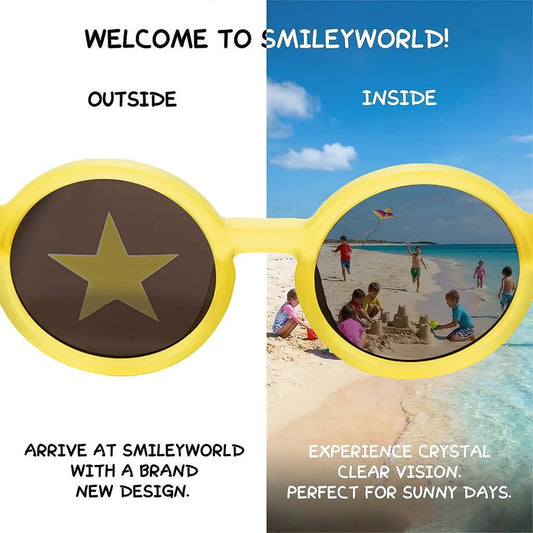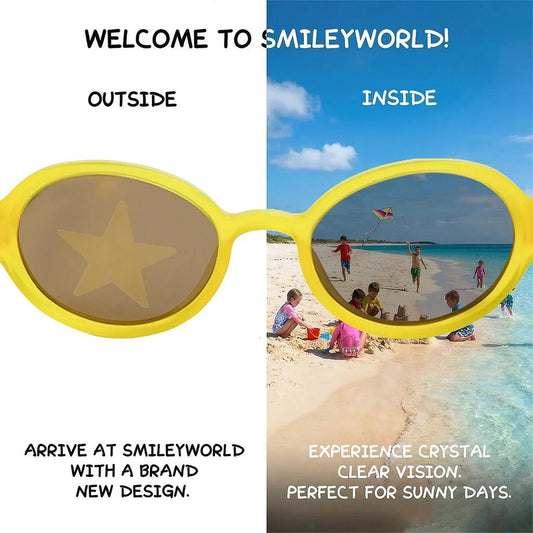

When choosing kids' sunglasses, prioritize 100% UV400 protection over polarized lenses to prevent pupil dilation damage. For active toddlers and kids, seek out BPA-free, TPEE flexible frames that won't snap when bent or chewed. Brands like SmileyWorld Kids Sunglasses combine these medical-grade safety features with sensory-friendly, lightweight fits and expressive designs that children actually want to keep on their faces.
In short, the best kids' sunglasses aren't just about cute designs—they require genuine UV400 protection, BPA-free flexible frames (like TPEE), and a comfortable fit that doesn't pinch.
As parents, it is incredibly easy to grab a cheap, stylish pair of shades from a gas station, a big-box store, or a discount seller just before a beach trip. However, based on testing and widespread optometrist advice, cheap tinted lenses without proper UV filters are actually more dangerous than wearing no glasses at all. Why? Because they trick the eye into opening wider, absorbing significantly more harmful rays.
Whether you are dealing with a 1-year-old who rips everything off their face, a teething toddler who chews on their frames, or an older child who needs durable gear for the playground, navigating the market can be overwhelming. This comprehensive guide will walk you through exactly how to choose the right eye protection for your child, avoid dangerous marketing gimmicks, and find the most durable, kid-approved frames on the market today.
The "Pupil Dilation Trap": Why Cheap Sunglasses Are Dangerous
Did you know that a child's crystalline lens is significantly more transparent than an adult's? This means their retinas are far more vulnerable to long-term UV radiation, which medical professionals link to early-onset cataracts and macular degeneration later in life.
The absolute biggest mistake parents make is buying "toy" sunglasses. When a child wears dark lenses, their pupils naturally dilate (open wider) to let in more light so they can see clearly in the artificial shade. If those dark lenses do not have a verified 100% UV filter, you are effectively opening the floodgates for UVA and UVB rays to directly strike the retina.
This "pupil dilation trap" can cause photokeratitis (essentially a painful sunburn of the cornea) and long-term cellular damage, which is actually much worse than if the child were just squinting in the sun without any shades at all.

Polarized vs. UV Protection: The Biggest Parent Myth
One of the most common questions on parenting forums and in eye doctor clinics is: "Are polarized sunglasses better for my kids' developing eyes?" There is a massive misconception that "polarized" is synonymous with "better sun protection." This is entirely false.
Polarization and UV protection are two completely independent technologies. Here is the exact breakdown of what you need to know when shopping:
| Feature | UV400 Protection (Crucial) | Polarized Lenses (Optional) |
|---|---|---|
| The Science | Blocks 100% of harmful UVA and UVB radiation from reaching the eye. | Filters out horizontal light waves that bounce off flat surfaces (glare). |
| Eye Safety | Mandatory. Prevents long-term cellular damage to the eye. | Optional. Improves visual comfort but does not block UV rays. |
| Best Used For | Everyday wear, playgrounds, walking, and standard outdoor activities. | Beach days (water glare), skiing (snow glare), fishing, and boating. |
| Potential Drawbacks | None. It is absolutely essential. | Cheap polarized films can sometimes distort vision, making screens hard to read. |
The Verdict: Always prioritize UV400. If you are heading to the lake or the beach, polarized lenses are a fantastic bonus to stop your child from squinting against the water's reflection, but polarization should never replace verified UV blocking.
How to Test Real UV Protection at Home
Don't blindly trust the flimsy "UV Protection" sticker on a $5 pair of glasses from an unknown seller. You can actually test the safety of your child's sunglasses at home in a dark room using a simple DIY method.
What you need:
- A small UV flashlight (blacklight).
- A UV test card OR a modern paper currency bill (like a US Dollar or Euro) that has a hidden UV security watermark.
The 3-Step Test:
- Lay the currency or test card flat on a table in a dark room.
- Place the sunglass lens directly over the hidden watermark area.
- Shine the UV flashlight directly through the lens onto the bill.
The Result: If the hidden watermark lights up and glows brightly, the glasses are fake—they are letting harmful UV light pass right through. If the watermark stays completely hidden and dark, the lenses are genuinely blocking UV rays.

The Solution: Why Parents Are Switching to SmileyWorld Kids Sunglasses
Toddlers and young kids are inherently destructive. They will bend, sit on, throw, and chew their sunglasses. If you want a pair that survives the rough-and-tumble years, you must look for frames made from TPEE (Thermoplastic Polyester Elastomer).
This is exactly why SmileyWorld Kids Sunglasses have become the go-to choice for parents who want uncompromising safety without sacrificing fun. Here is why they stand out in a crowded market:
- Virtually Indestructible TPEE Frames: Made from high-tech memory rubber, SmileyWorld frames can be twisted, bent, and sat on, and they will pop right back into their original shape.
- 100% BPA-Free & Non-Toxic: Babies explore the world with their mouths. SmileyWorld ensures that all frame materials are food-grade safe, meaning you don't have to panic if your teething toddler decides their sunglasses make a great chew toy.
- True UV400 Polycarbonate Lenses: Unlike cheap plastic that shatters upon impact, polycarbonate lenses provide superior shatter resistance for active play, completely blocking 100% of UVA and UVB rays.
- The "Smiley" Appeal: Let's face it, the hardest part of kids' sunglasses is getting them to wear them. With vibrant, expressive designs synonymous with the iconic Smiley brand, kids see these not as a protective medical device, but as a fun, happy accessory they actually want to show off.

Keeping Them On: Behavioral Hacks for Toddlers
"How do I keep sunglasses on my 1-year-old?" is a universal parenting struggle. Toddlers have high sensory defense, meaning they instinctively hate unfamiliar, tight objects on their faces.
Common Mistakes:
- Strapping them too tight: While thick neoprene straps seem logical to prevent drops, tight elastic bands pull the frames into the child's eyelashes and leave painful red marks on the bridge of the nose. This guarantees a sensory meltdown.
- Forcing it: Forcing glasses onto a screaming toddler creates a negative association that is hard to break.
Pro-Tips for Compliance:
- Opt for Sensory-Friendly Frames: This is where SmileyWorld Kids Sunglasses shine. Their ultra-lightweight, ergonomic curve hugs the child's head naturally without pinching the temples or requiring a restrictive strap.
- The Power of Modeling: Toddlers are mimics. Make a big show of putting your own sunglasses on every time you step outside. Say, "Mommy's glasses are on to protect her eyes, now it's your turn to wear your Smileys!"
- Distraction Integration: Put the glasses on them the exact second you hand them a highly desired snack, place them in their favorite stroller, or start a fun outdoor activity. If their brain is busy processing the fun, they forget about the glasses.

Active Play & Everyday Sports: Impact Resistance Matters
When kids graduate from the stroller to running around the playground, riding bikes, or playing everyday sports, standard fashion sunglasses are no longer safe. An unexpected fall or a stray ball requires serious, impact-rated eye protection.
If your child is playing high-velocity competitive sports like league baseball, you might look for specific ANSI Z87.1 industrial-rated sports goggles. However, for 95% of active childhood play—including biking, hiking, and playground games—heavy, expensive sports goggles are overkill and often uncomfortable.
For everyday active play, SmileyWorld Kids Sunglasses offer the perfect balance. Equipped with shatter-resistant polycarbonate lenses, they ensure that if your child takes a tumble, the lenses won't break into dangerous shards. Combined with the wrap-around grip of the TPEE memory frame, they stay securely on your child's face even when they are sweating and running full speed.

Conclusion: The Smart Choice for Your Child's Eyes
Investing in proper kids' sunglasses is an investment in their long-term eye health. You don't have to compromise between medical-grade safety, extreme durability, and a design your child will actually love.
By choosing SmileyWorld Kids Sunglasses, you are securing 100% UV400 protection to avoid the pupil dilation trap, getting indestructible TPEE frames that survive the roughest play, and choosing a sensory-friendly fit that puts an end to the "sunglass struggle."
Protect their eyes, encourage outdoor play, and let them wear a smile!
Frequently Asked Questions (FAQs)
Are cheap sunglasses bad for kids?
Yes. Cheap sunglasses with dark tints but no UV filter cause the pupil to dilate, letting more harmful UV rays into the eye than if the child wore no sunglasses at all. This increases the risk of photokeratitis and long-term cellular damage.
Do polarized sunglasses protect eyes better?
No. Polarization only reduces horizontal glare to improve visual comfort around water or snow. UV400 protection is what actually protects the eyes from cellular damage. A lens can be UV-protective without being polarized.
What are the safest frames for toddlers?
The safest frames are made from TPEE (Thermoplastic Polyester Elastomer) and are 100% BPA-free. Brands like SmileyWorld Kids use this material because it is ultra-flexible, unbreakable, and safe if a teething toddler decides to chew on them.
How do I keep sunglasses on my 1-year-old?
Avoid tight straps that cause sensory discomfort and red marks. Instead, opt for ultra-lightweight, ergonomic frames like SmileyWorld Kids that don't pinch. Use positive reinforcement, distract them during the initial fitting, and practice modeling by wearing your own sunglasses consistently.
What kind of lenses are best for active kids?
Polycarbonate lenses are the gold standard for active kids. Unlike standard plastic or glass, polycarbonate is highly shatter-resistant, ensuring the lenses won't break and injure the eye if the child falls or gets hit by an object during play.